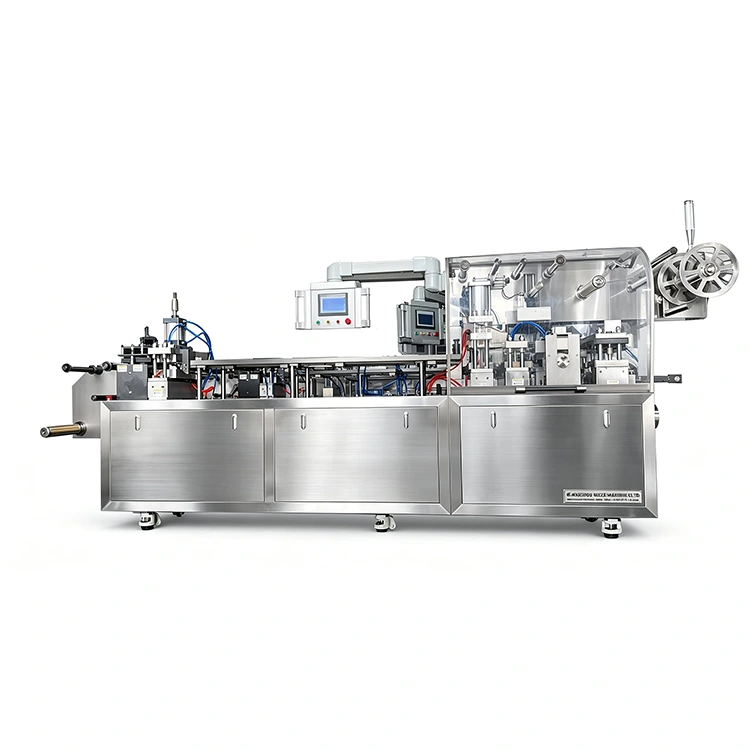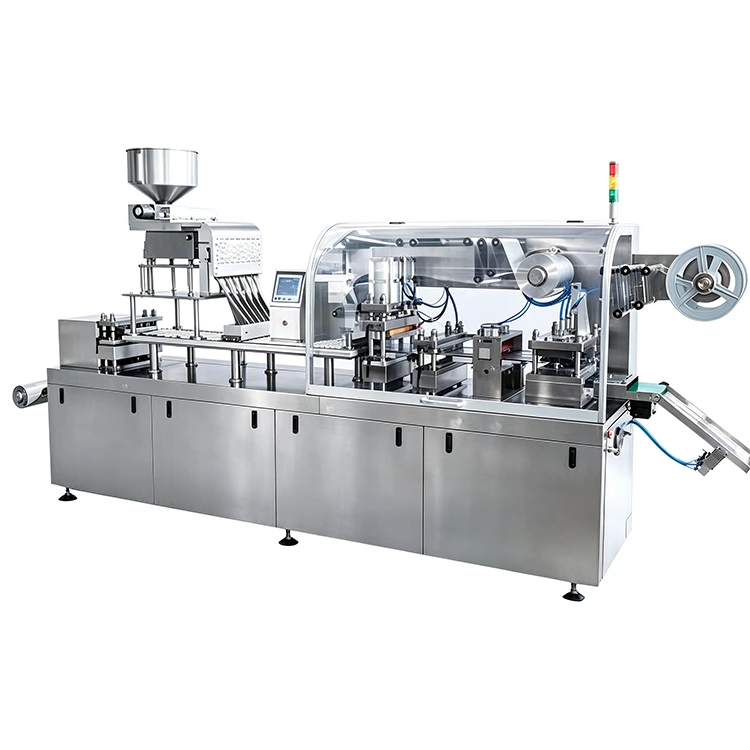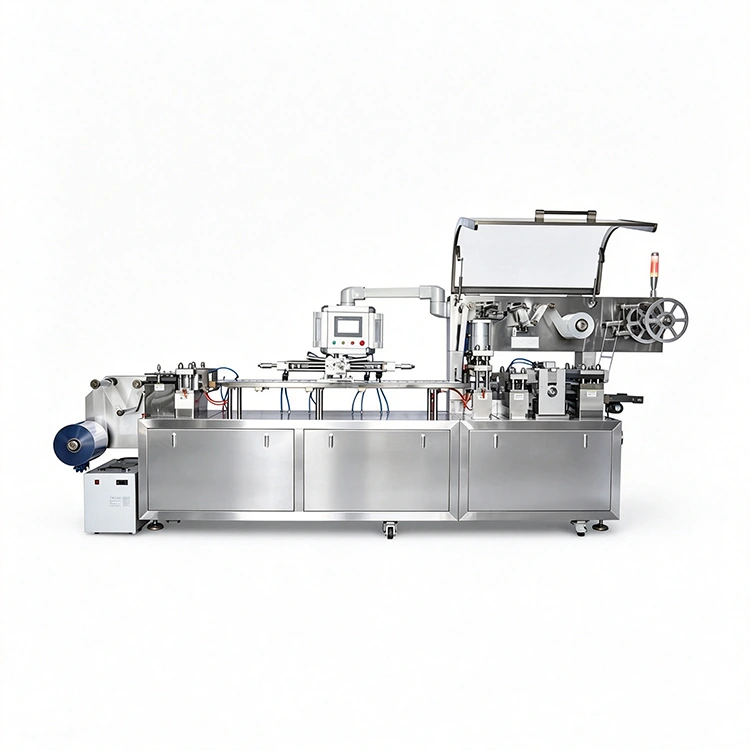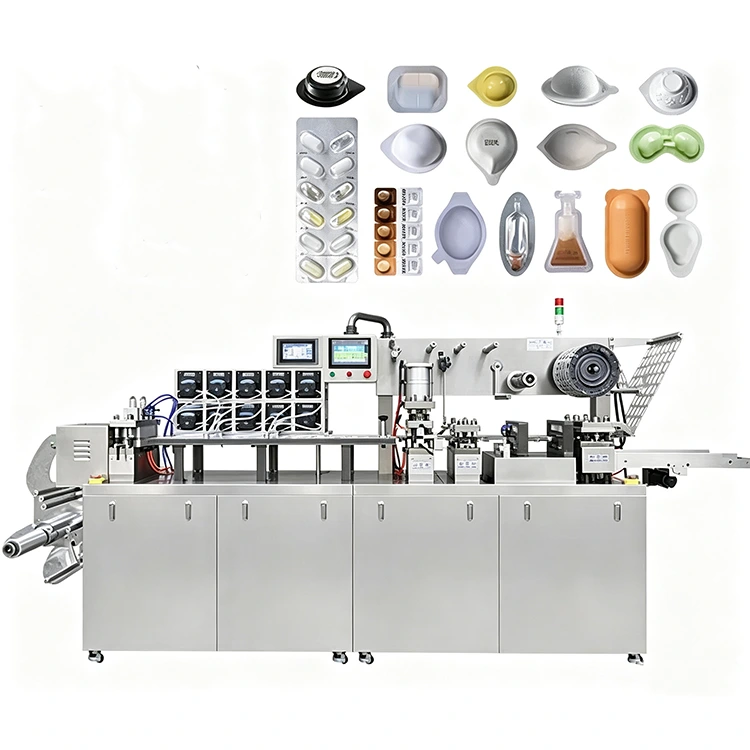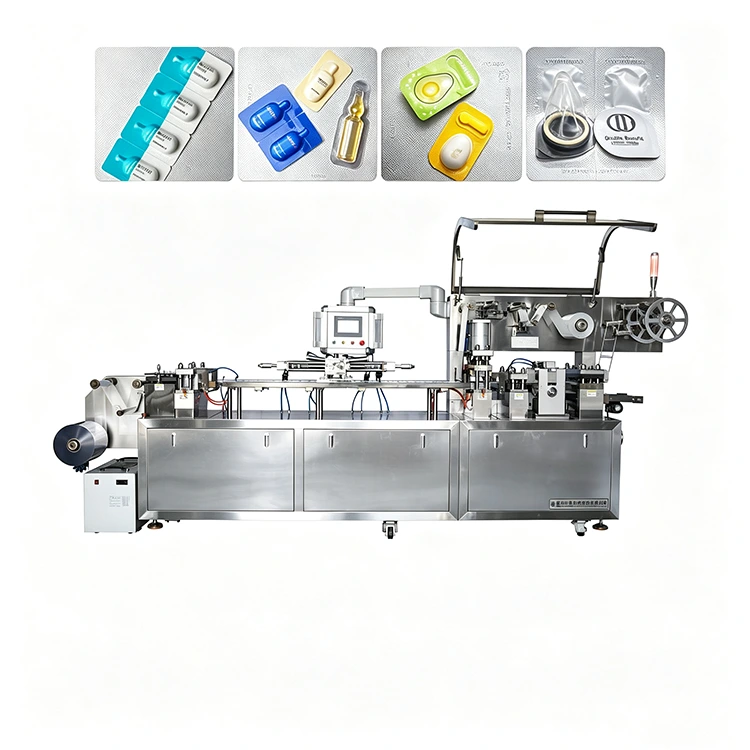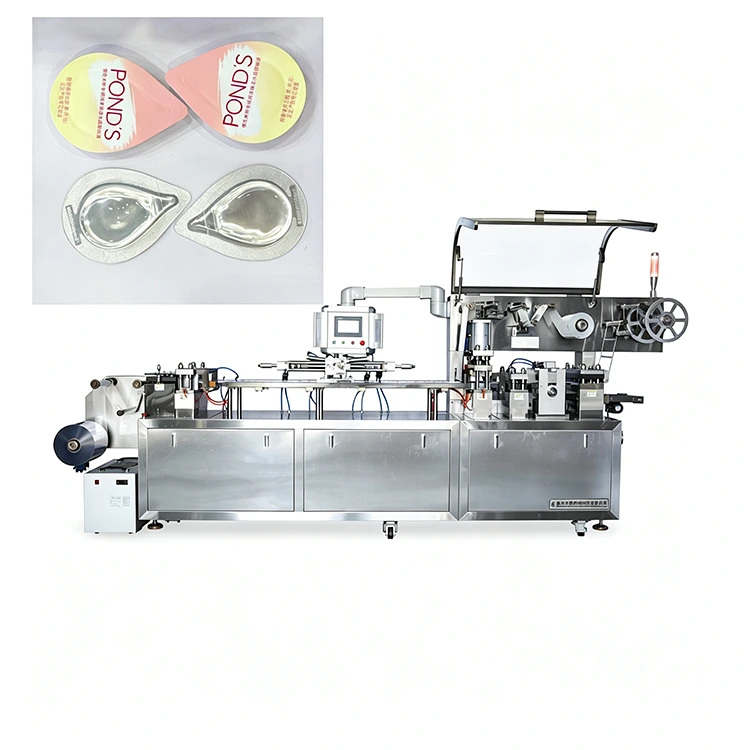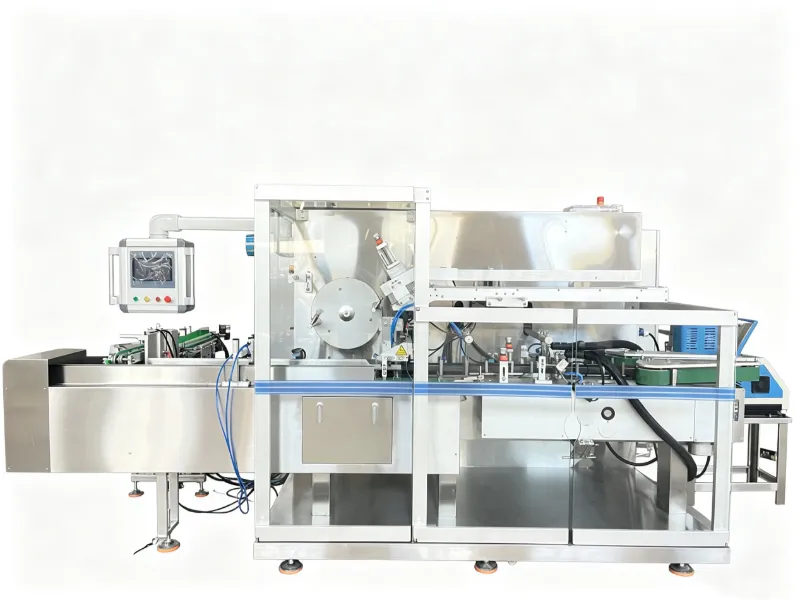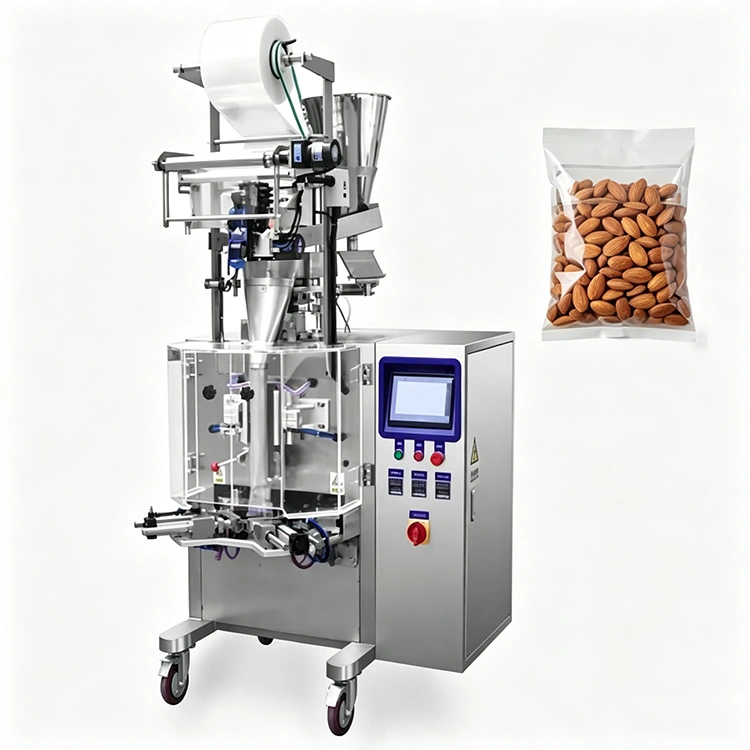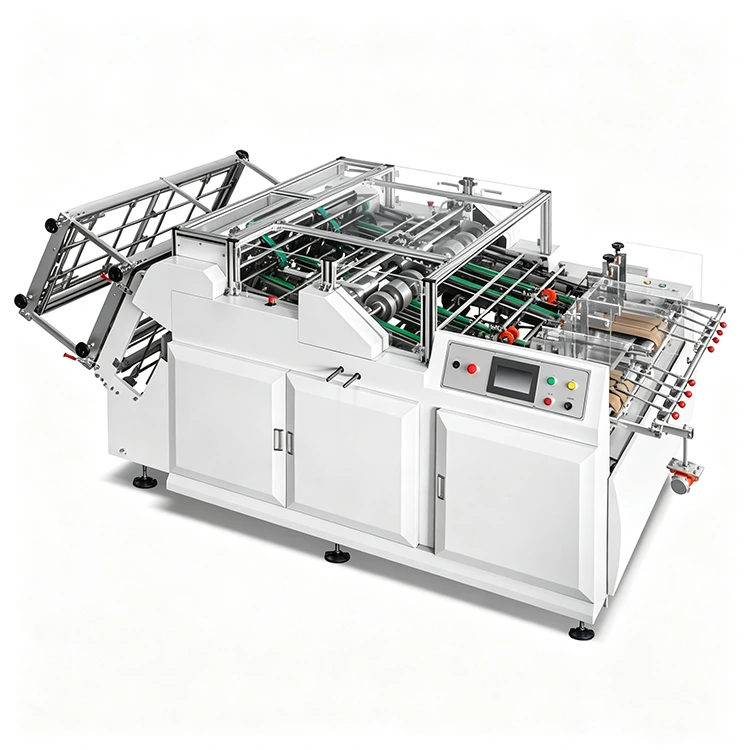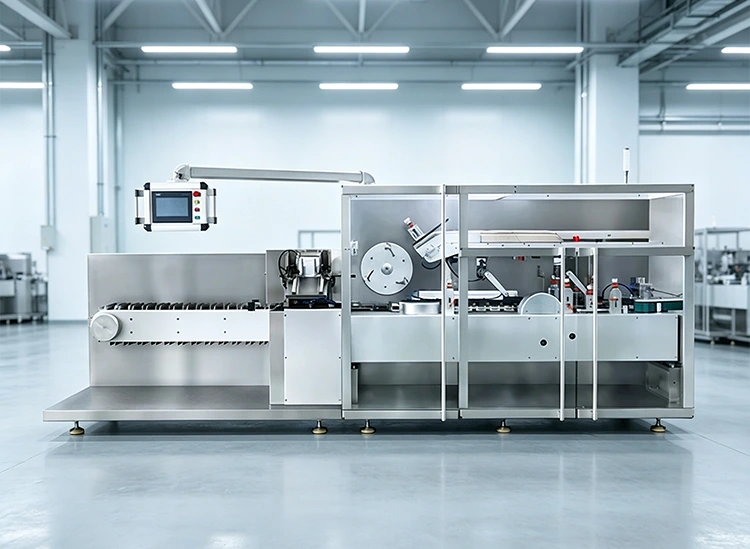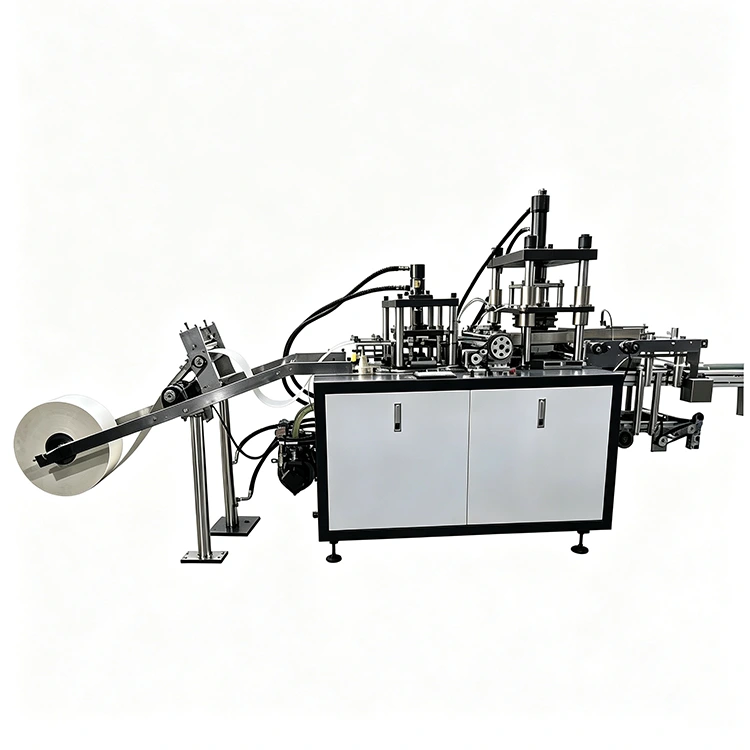

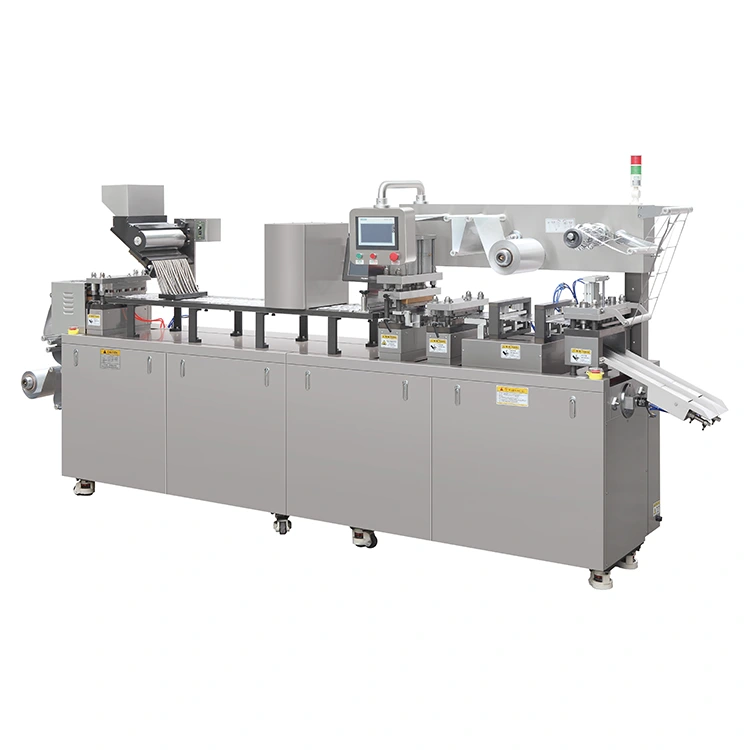
This Automatic Tablet Capsule Packaging Pill Blister Packing Machine brings together the latest technology and practical design to handle everything from start to finish—film feeding, blister forming, filling, sealing, coding, and cutting—all in one smooth, automated process.
Ever opened a shipment of blisters and found half of them bowed, wrinkled, or inconsistent?
If you've run a rotary or roller-type blister machine, you've seen it. The film stretches unevenly around corners. Wall thickness varies from one cavity to the next. Finished plates curl up instead of lying flat — making downstream cartoning a nightmare.
That's not your operator's fault. That's the forming method.
The our Automatic Tablet Capsule Packaging Pill Blister Packing Machine uses flat-plate forming — not roller, not rotary. The film is clamped, heated, and formed in a single, controlled stroke. Cavity depth is consistent corner to corner. Wall thickness doesn't vary. And the finished plate stays flat — always.
We've had customers reduce their reject rate from 4–5% to under 0.5% just by switching to flat-plate forming.
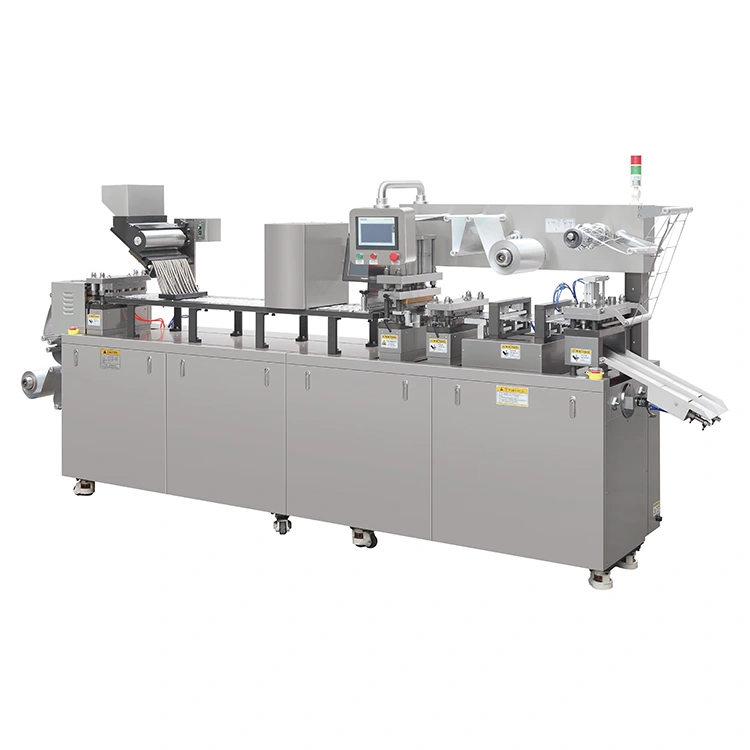
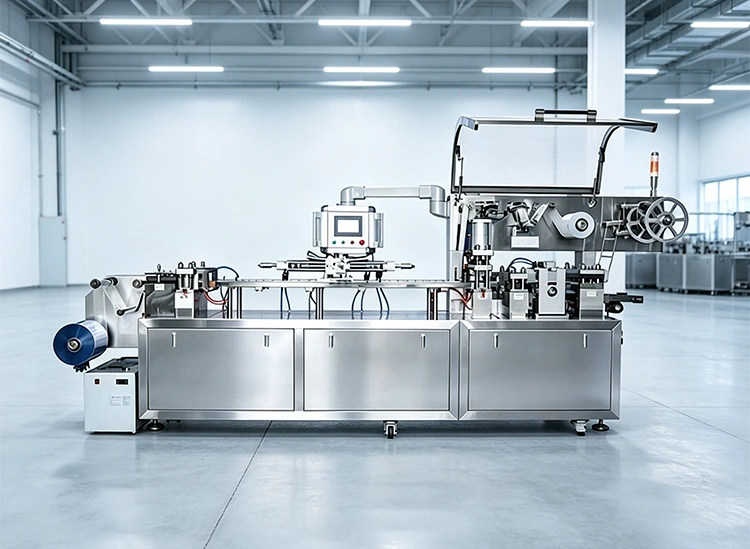
KEDE DPP-260 Automatic Tablet Capsule Packaging Pill Blister Packing Machine
One machine. Four operations. One operator.
The DPP-260 integrates forming, product filling, heat sealing, and punching into a continuous, fully automated process. It runs on PVC, PTP aluminum foil, PET, PS, and ALU-ALU composite materials — 250mm width standard.
|
Station |
What Happens |
|
Forming |
PVC or hard aluminum film is heated and drawn into cavities by the flat-plate mold — consistent depth, no distortion |
|
Filling |
Products (tablets, capsules, soft gels, hardware, etc.) are placed into formed cavities — manual or automatic feeder |
|
Sealing |
PTP foil or lidding material is heat-sealed over the filled cavities — uniform pressure, clean seal |
|
Punching |
Individual blister plates are cut from the web — waste material automatically rewound |
Speed: 15–25 cuts per minute
Maximum forming area: 240 × 130 × 35 mm — enough for larger capsules, suppositories, or multi-cavity layouts.
Built for GMP environments — stainless steel exterior, accessible cleaning points, no dead spots where product residue can accumulate.
|
|
Rotary / Roller Forming |
Flat-Plate Forming (DPP-260) |
|
Wall thickness |
Varies — thinner at edges and corners |
Uniform across the entire cavity |
|
Plate flatness |
Tends to warp or bow — causes downstream feeding issues |
Remains flat — feeds cleanly into cartoning |
|
Cavity definition |
Less precise — edges may round off |
Sharp, consistent — products fit snugly |
|
Material handling |
Film tension fluctuates during rolling |
Film is clamped and held — stable tension |
|
Changeover |
More complex — multiple adjustments needed |
Simpler — mold swap with fewer variables |
|
Reject rate |
Typically 3–5% for complex shapes |
Under 1% for most applications |
Bottom line: If you're packaging pharmaceuticals, medical devices, or high-value cosmetics, the higher upfront cost of a flat-plate machine pays for itself in reduced rejects and less downtime.
"We switched from rotary to the DPP-260. Our reject rate dropped from 4.2% to 0.3% in the first month." – Production Manager, Pharmaceutical Packaging Plant, India
One Machine, Multiple Packaging Formats
The DPP-260 doesn't lock you into one material type. In a single shift, you can run:
|
Material |
Typical Application |
|
PVC (standard) |
Tablets, capsules, food items — cost-effective |
|
PTP aluminum foil |
Lidding — provides moisture/oxygen barrier |
|
PET / PS |
Cosmetics, electronics — clear, glossy appearance |
|
ALU-ALU (aluminum-aluminum) |
High-barrier pharmaceutical packaging — moisture-sensitive products |
|
PVDC-coated PVC |
Extended shelf life — additional barrier |
Material width: 250mm standard (other widths available on request)
Heating system — Upper and lower heating plates with independent PID temperature control. Adjustable for different material thicknesses and forming characteristics.
1. Heating plate design — We use cast-in heating elements with independent zone control. No cold spots. No hot spots. The film heats evenly across the full forming area.
2. Forming station construction — The flat mold is machined from hardened tool steel on a CNC milling center. Surface finish is ground to RA 0.8 µm. This isn't cosmetic — it directly affects how cleanly the film draws into the cavity.
3. Sealing pressure control — Pneumatic cylinders with adjustable pressure regulators. We calibrate each machine at the factory with your actual material. The seal is firm but not crushed.
4. Waste edge rewinding — Automatic scrap rewinding with tension control. No need to babysit the waste roll — it winds cleanly and doesn't drag on the main web.
5. Photoelectric registration — If you're using pre-printed foil, the machine registers the print to the cavity position automatically. No manual alignment.
6. Batch coding — Optional inkjet or embossing unit for date, lot, and expiration code printing. Integrated into the output conveyor — no second pass.
7. PLC & HMI — We use a Siemens or equivalent PLC with a color touchscreen. Faults show up as plain English text, not cryptic codes. Operator training takes half a day, not a week.
|
Industry |
Products |
Typical Cavity Depth |
|
Pharmaceuticals |
Tablets, capsules, soft gels, suppositories, ampoules, powder vials |
8–30 mm |
|
Nutraceuticals |
Vitamins, probiotics, fish oil softgels, herbal extracts |
10–25 mm |
|
Food & Confectionery |
Chewing gum, candy pieces, chocolate miniatures, tea capsules |
12–20 mm |
|
Cosmetics |
Cream samples, serum pods, lip balm sticks, single-use mask capsules |
15–35 mm |
|
Medical Devices |
Syringes, needles, bandages, surgical gloves, dental burs |
10–30 mm |
|
Consumer Goods |
Batteries, small bulbs, connector pins, jewelry components |
8–20 mm |
If you're not sure whether your product fits, send us samples. We'll run a test and send you video confirmation before you order.
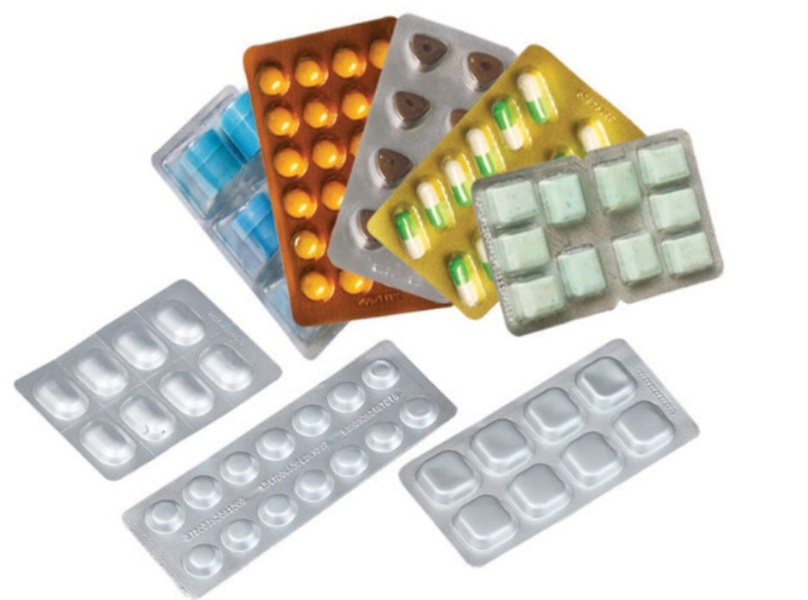
|
Parameter |
DPP-260Automatic Tablet Capsule Packaging Pill Blister Packing Machine |
|
Speed |
15–25 cuts/min |
|
Maximum forming area |
240 × 130 mm |
|
Maximum forming depth |
35 mm |
|
Material width (standard) |
250 mm |
|
Blister material thickness |
0.15–0.5 mm (PVC/ALU) |
|
Cover material thickness |
0.02–0.035 mm (PTP foil) |
|
Power supply |
380V 50Hz (custom voltage available) |
|
Total power consumption |
5 KW |
|
Compressed air pressure |
0.5–0.7 MPa |
|
Air consumption |
≥ 0.9 m³/h |
|
Cooling method |
Ordinary tap water circulation |
|
Dimensions (L×W×H) |
4200 × 650 × 1640 mm |
|
Machine weight |
1500 KG |
|
Frame material |
Carbon steel + aluminum alloy |
|
Exterior material |
SUS304 stainless steel |
|
Certification |
CE, ISO 9001, GMP-compliant |
When you order a DPP-260 Automatic Tablet Capsule Packaging Pill Blister Packing Machine, you're not just getting a machine body.
Complete machine assembly with stainless steel cladding
Forming station with flat-plate mold (one set, based on your cavity layout)
Heating plates (upper and lower)
Filling station (manual loading configuration standard)
Heat sealing station with pneumatic pressure control
Punching/cutting station with die
Waste edge rewinder with tension control
PLC control system with color touchscreen HMI
CE-compliant safety guards and interlocks
Full documentation: operation manual, parts list, electrical schematics, lubrication chart
QR code video training link (mounted on machine)
|
Option |
What It Adds |
|
Automatic product feeder |
Vibratory or counting feeder — eliminates manual filling |
|
Inkjet coder |
Date/lot/expiry printing on finished blisters |
|
Additional mold sets |
Different cavity layouts for multiple product SKUs |
|
Protective guard upgrades |
Full coverage guards for high-security production environments |
We Don't Just Assemble Machines. We Test Them With Your Products.
Machine cleaned, protective film applied to stainless surfaces. Export wooden crate with VCI rust protection and internal bracing. Shipping documents prepared — certificate of origin, CE declaration, commercial invoice, packing list.
We're Not a Trading Company. We Build What We Sell.
We're the manufacturer — KEDE Machinery is a factory in Wenzhou, China. You deal with the people who designed and built the machine. No middleman markup.
We test before we ship — Your product, our machine, confirmed results. We'll send you a video of the test run before we crate it.
We've done this before — DPP-260 machines are running in pharmaceutical plants in India, Southeast Asia, Europe, and South America. We know what works.
We're straightforward — If your product doesn't fit the machine, we'll tell you before you order. No hard sell.
We keep it simple — One machine. One manual. One support contact. No layers of bureaucracy.
Ready to See What the DPP-260 Automatic Tablet Capsule Packaging Pill Blister Packing Machine Can Do for Your Line?
Tell us about your product:
What are you packaging? (Tablets? Capsules? Cosmetics? Hardware?)
Blister cavity dimensions? (Length × Width × Depth)
Target output?
Material preference? (PVC, PET,PS, ALU-ALU?)
Destination port?
We'll send you:
Factory-direct wholesale price (FOB Shanghai/Ningbo)
Recommended tooling configuration
Lead time
Sample test video (if you send us product samples)
Full technical specification sheet
Address
NO.235, Zhaqiao Road, Kunyang Town, Pingyang County, Wenzhou City, Zhejiang Province, China
Tel