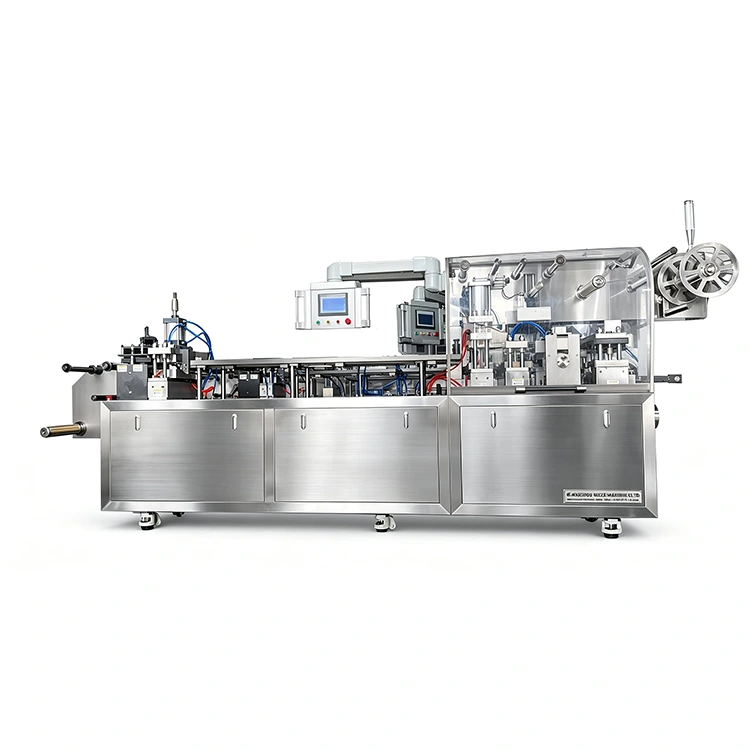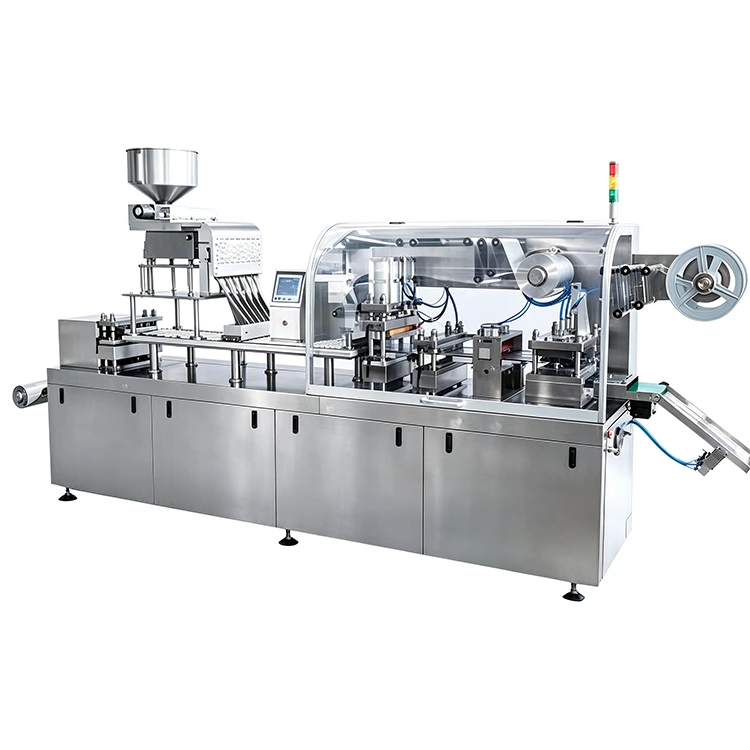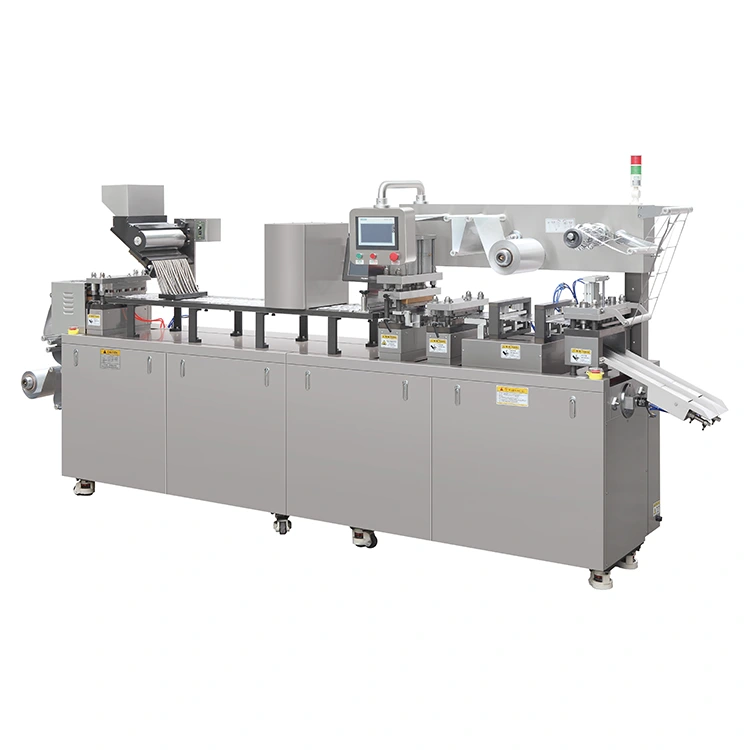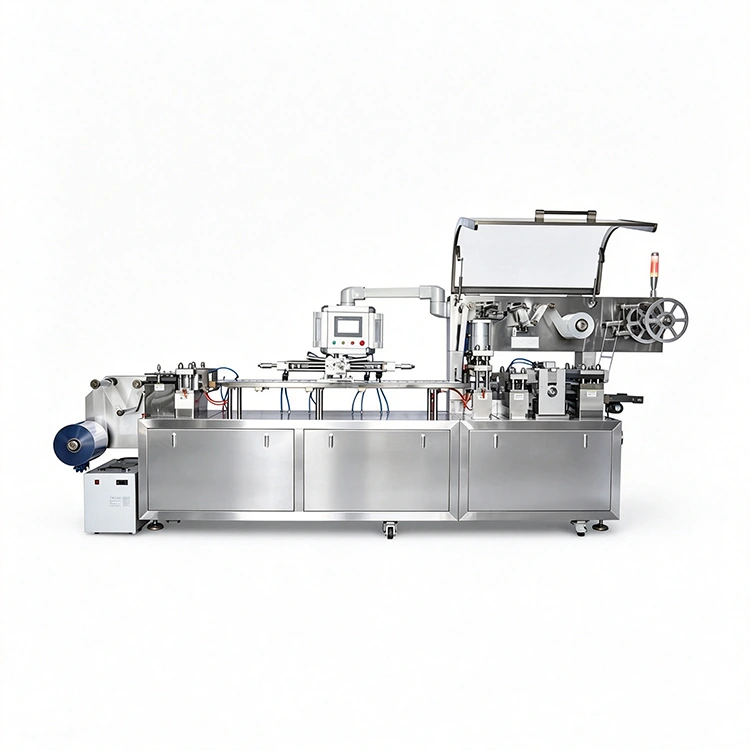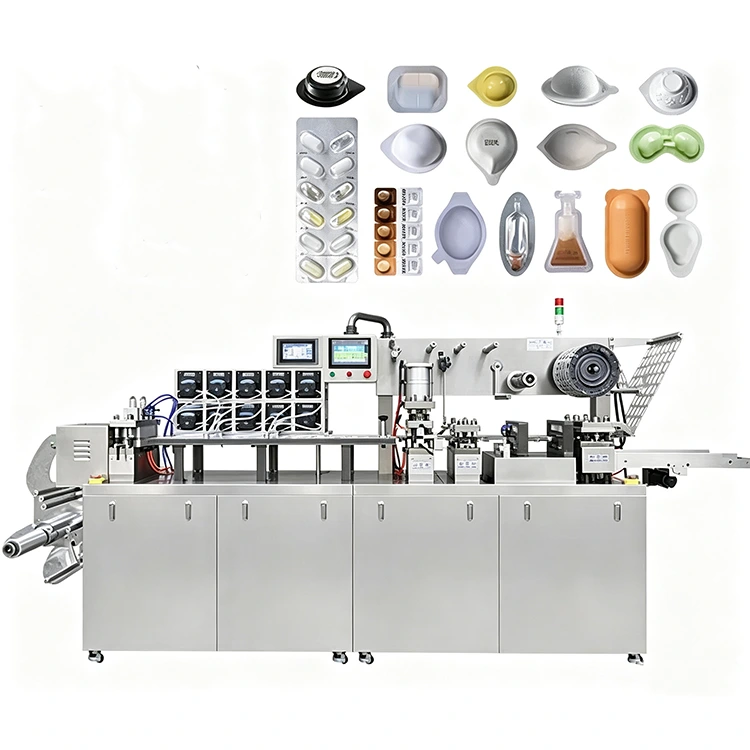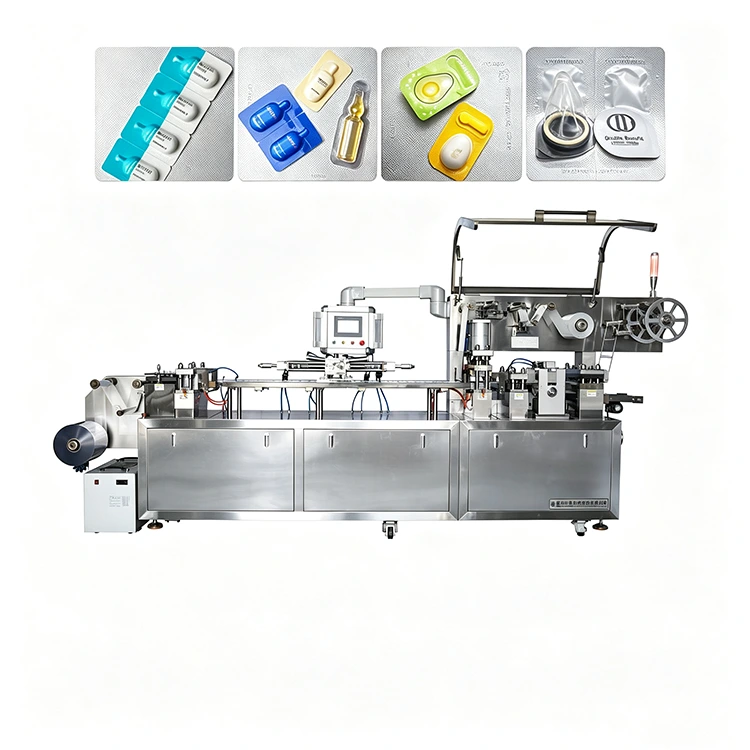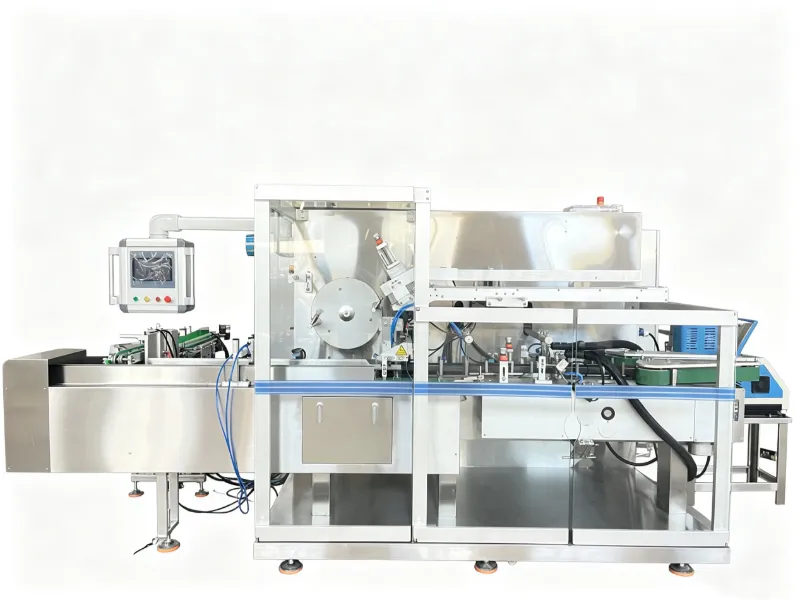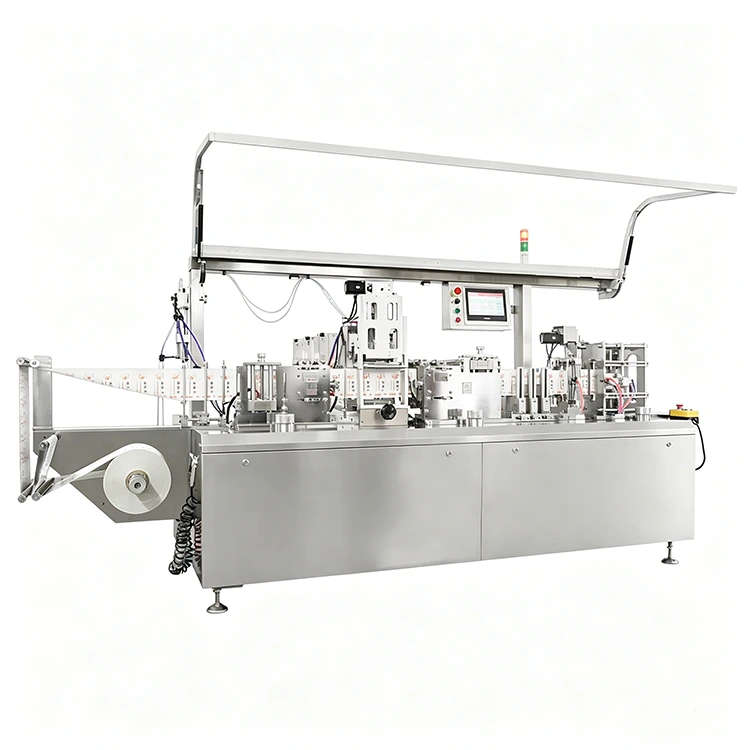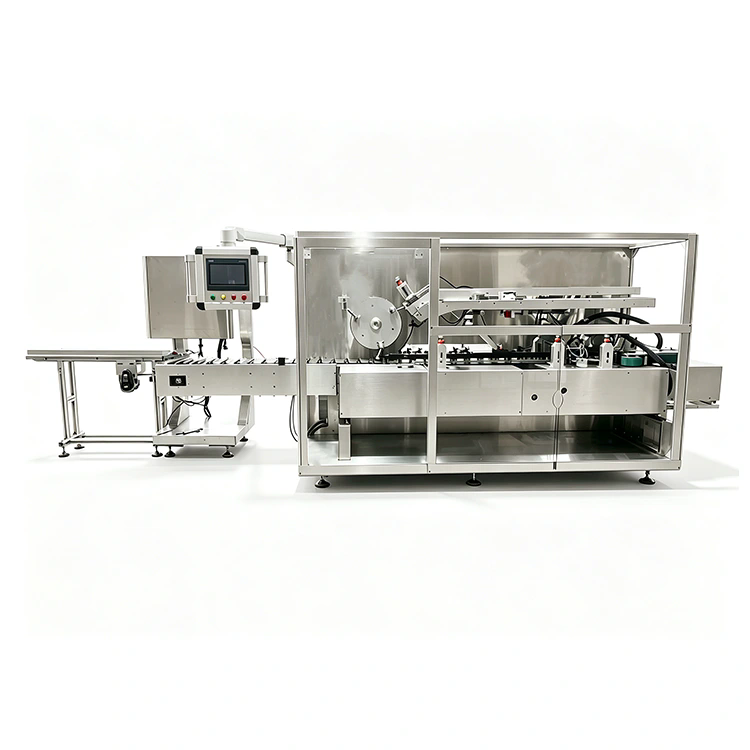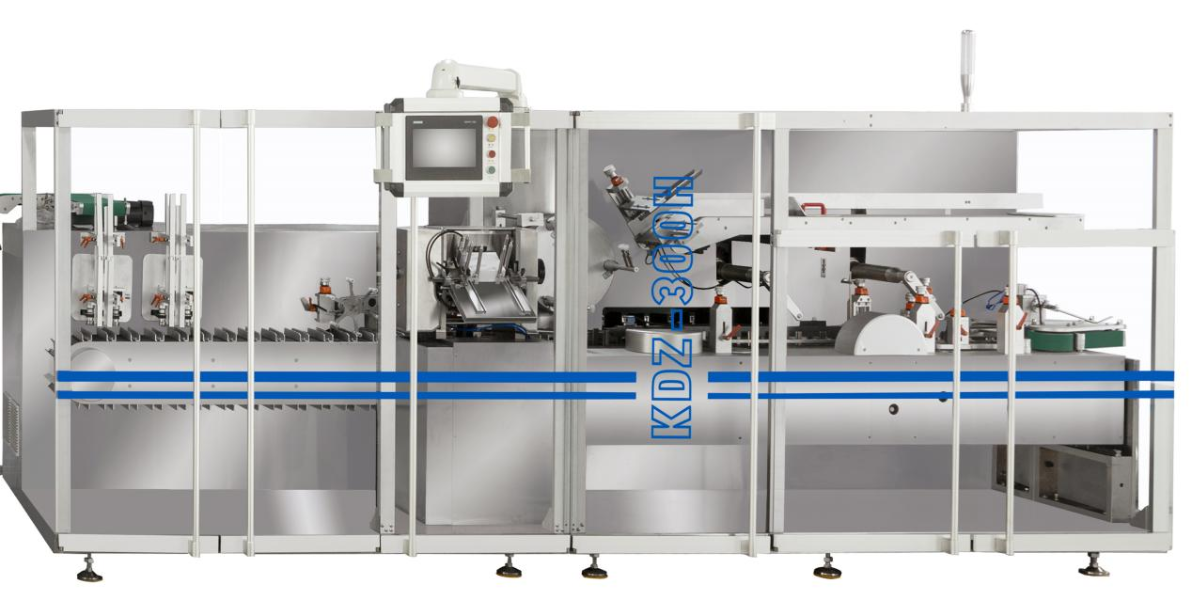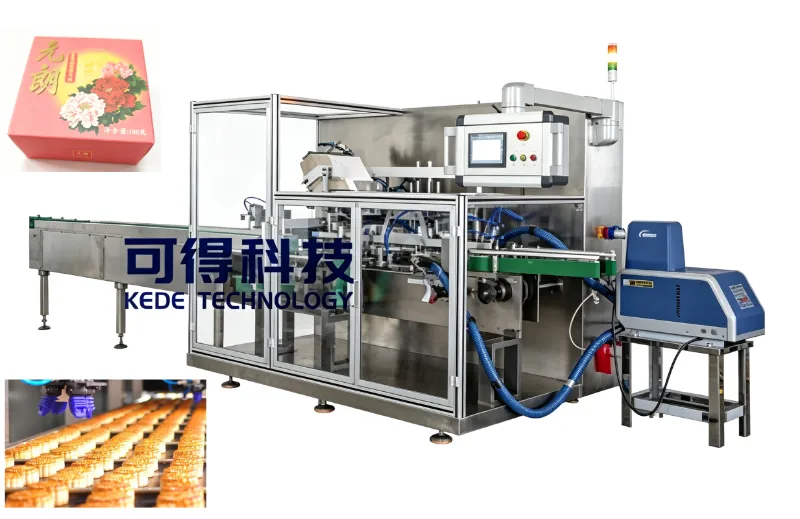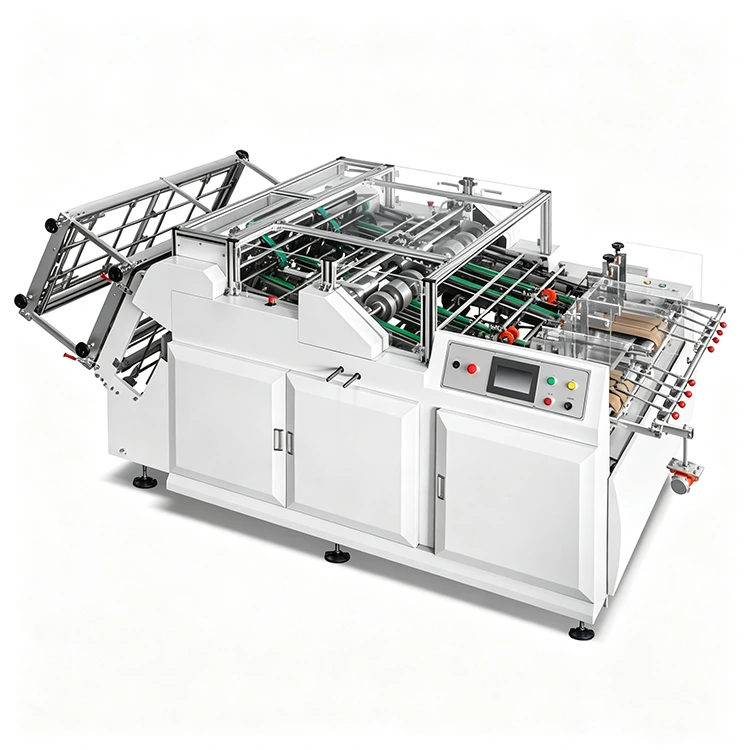

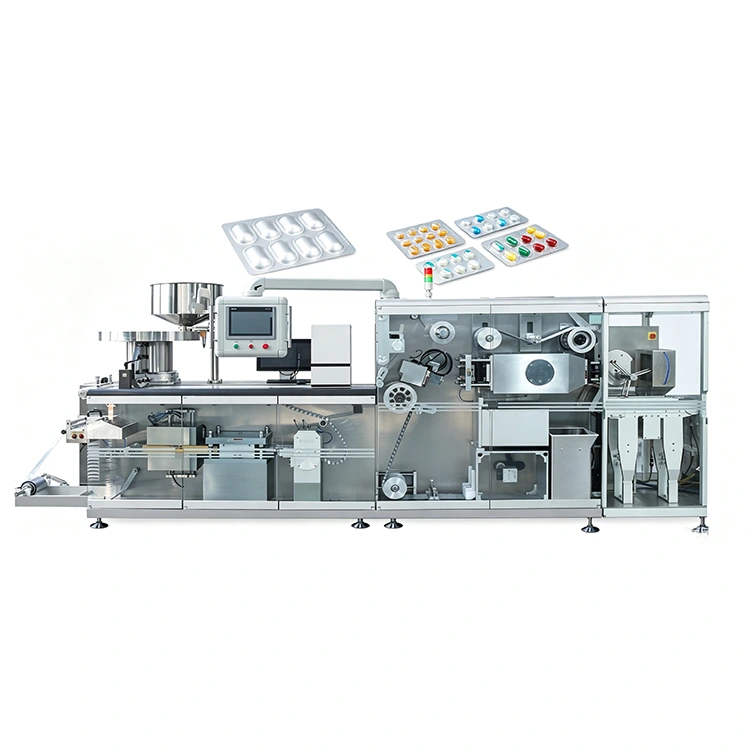
TheHigh speed Roll-plate capsule pill blister machine is an advanced servo-driven blister packaging machine built around a Panasonic motion controller and eight independent servo axes. Instead of relying on conventional cams, gears and chains for mechanical synchronization, each major motion is electronically controlled. This allows operators to adjust production parameters through the HMI rather than mechanically retiming the machine, making the machine particularly suitable for pharmaceutical production lines that handle frequent product changes, demanding output targets or multiple blister formats.
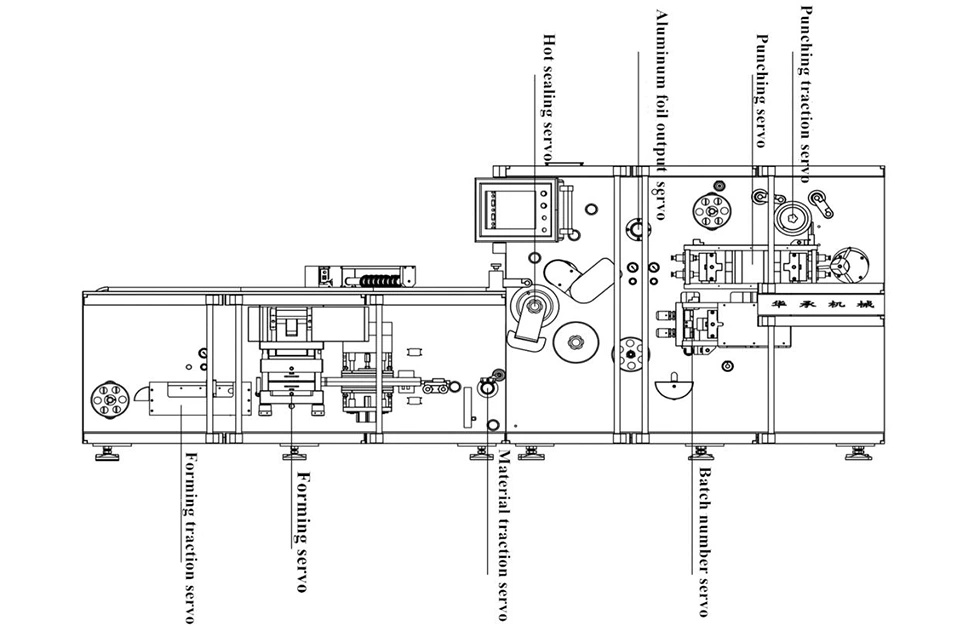
Traditional blister machines mechanically synchronize forming, feeding, sealing and punching through cams, gears and chains. When the product or tooling changes, operators may need to adjust mechanical timing and alignment before restarting production.
The High speed Roll-plate capsule pill blister machine takes a different approach.
Its Panasonic motion controller coordinates eight independent servo axes, giving the machine electronic control over the major production movements.
|
Servo Axis |
Controlled Function |
|
1 |
PVC / aluminum main material feeding |
|
2 |
Forming station |
|
3 |
Forming traction |
|
4 |
Aluminum foil active feeding |
|
5 |
Heat sealing station |
|
6 |
Batch number printing |
|
7 |
Punching traction |
|
8 |
Punching station |
The result is a machine where synchronization is handled primarily through electronic motion control rather than mechanical timing adjustment.
OurHigh speed Roll-plate capsule pill blister machine is designed for both conventional ALU-PVC blister packaging and higher-barrier ALU-ALU blister packaging.
|
Packaging Format |
Steady Production Speed |
Maximum Speed |
|
ALU-PVC |
120–150 cuts/min |
200 cuts/min |
|
ALU-ALU |
60–80 cuts/min |
100 cuts/min |
The recommended production speed depends on material, product characteristics, cavity layout, forming depth and other production parameters.
Rather than treating maximum speed as the only performance indicator, the DPH-380H is designed to maintain controlled feeding, forming, sealing and punching throughout the production cycle.
The High speed Roll-plate capsule pill blister machine does not depend on a single high-speed drive. Its performance comes from coordinating individual stations throughout the packaging process.
The external double-roll PVC platform supports two rolls simultaneously, allowing operators to prepare the next roll while the current material is still in production. This helps reduce material changeover downtime.
Servo-driven material feeding actively pulls the web through the machine rather than relying only on passive movement. Automatic web correction helps maintain the blister belt position and reduce material deformation during processing.
Upper and lower heating plates use PID temperature control for more precise heating management. The plates can be opened independently through the touchscreen during material threading.
The forming station uses an independent servo and crank-arm structure rather than a conventional double-cam drive. The mold uses a card-slot installation structure designed to simplify replacement without reconnecting cooling pipes.
Servo-driven forming traction uses a 320 × 380 mm stroke and dual air clamps with elastic adjustment to accommodate different material thicknesses.
The adjustable track feeder can handle round tablets, capsules, square tablets and shaped products. Independent screen vibration helps separate products and supports controlled placement into individual cavities.
The aluminum foil feed is servo-driven with constant torque. Photoelectric registration aligns pre-printed foil graphics with the blister cavities, while an anti-wrinkle mechanism helps control the foil during feeding.
The independent servo heat-sealing station uses a large-diameter mesh roller to provide consistent sealing pressure at high production speeds. A water-cooled reverse pre-compression roller helps control package deformation, particularly in ALU-ALU applications.
The batch-number printing unit uses a drawer-type structure for installation and adjustment. Printing pressure can be adjusted through the threaded mechanism.
Servo-controlled punching traction and punching work in synchronization with the packaging web and tear line. A pre-compression roller and punching guide system help stabilize the material during high-speed cutting.
High-speed blister packaging requires more than accurate forming and sealing. The machine must also identify and remove defective plates before they enter downstream processes.
The High speed Roll-plate capsule pill blister machine uses a four-level verification system covering:
1. Photoelectric detection
2. Scrap elimination confirmation
3. Finished-product inspection
4. Manual scrap confirmation
If the expected counts do not reconcile, the machine can stop for inspection rather than allowing an unresolved discrepancy to continue through production.
A 120° rotary manipulator is also used for finished-product handling and rejection. According to the supplied specifications, the design is intended to improve handling speed, reduce waste edges and allow individual rejection so that only defective plates are removed.
|
Parameter |
DPH-380H |
|
Model |
DPH-380H |
|
Machine Dimensions (L × W × H) |
5600 × 1200 × 1800 mm |
|
Machine Weight |
3500 kg |
|
Forming Area |
300 × 380 mm |
|
Maximum Forming Depth |
≤16 mm |
|
Total Power |
29 kW |
|
Control System |
Panasonic Motion Controller + 8 Servo Axes |
|
Heat Sealing |
Roller-Type Heat Sealing |
|
ALU-PVC Speed |
120–150 cuts/min steady; 200 cuts/min maximum |
|
ALU-ALU Speed |
60–80 cuts/min steady; 100 cuts/min maximum |
|
Production Requirement |
Conventional Mechanical Drive |
DPH-380H |
|
Main Drive |
Cams, gears and chains |
8 independent servo axes |
|
Synchronization |
Mechanical timing |
Electronic synchronization |
|
Changeover |
Mechanical adjustment and trial runs |
Parameter-based adjustment |
|
Typical Changeover |
2–4 hours stated |
20–30 minutes stated |
|
Wear Components |
Cam and chain wear |
Reduced mechanical timing wear |
|
Fault Identification |
Manual troubleshooting |
HMI-based station information |
|
Remote Diagnosis |
Limited |
PLC / servo remote support |
|
ALU-PVC Output |
80–120 cuts/min stated |
120–150 steady; 200 maximum |
The DPH-380H High speed Roll-plate capsule pill blister machine uses industrial components from established suppliers for its main control, sensing, pneumatic and transmission systems.
|
Component |
Brand / Configuration |
|
Motion Control |
Panasonic |
|
Servo System |
Panasonic |
|
Electrical Components |
Schneider |
|
Sensors |
SICK |
|
Pneumatic Components |
Airtac |
|
Reducers |
RECKON, Italy |
This component configuration supports the machine's servo-driven architecture and facilitates maintenance and technical support.
Each High speed Roll-plate capsule pill blister machine is supplied with the core equipment required for the configured blister production process.
● Complete machine with 8-servo system
● Panasonic motion controller
● Eight servo motors
● One product-specific mold set
● External double-roll PVC platform
● Automatic material correction
● Photoelectric registration
● Servo-driven forming system
● Servo heat-sealing system
● Servo punching system
● Rotary 120° manipulator
● Four-level quality verification
● 11-inch color touchscreen HMI
● English technical documentation
● Pre-shipment factory acceptance test
The machine can be tested with customer samples before shipment, with video witnessing available according to the supplied project information.
The DPH-380H is a high-speed servo-driven blister packaging machine designed for pharmaceutical and other suitable blister applications. It uses eight independent servo axes coordinated by a Panasonic motion controller.
Each major production movement can be controlled independently, including material feeding, forming, sealing, batch printing and punching. This provides electronic synchronization and reduces dependence on mechanical timing adjustment.
Yes. The machine is specified for both ALU-PVC and ALU-ALU blister packaging. Production speed and configuration vary according to the selected material and product.
For ALU-PVC packaging, the stated steady speed is 120–150 cuts/min, with a maximum of 200 cuts/min. For ALU-ALU, the steady speed is 60–80 cuts/min, with a maximum of 100 cuts/min.
The supplied comparison specifies approximately 20–30 minutes for the DPH-380H under the stated configuration, compared with 2–4 hours for conventional mechanical machines. Actual time depends on the product, mold and operator.
Yes. The adjustable track feeder is designed to accommodate round tablets, capsules, square tablets and shaped products. The final feeding configuration should be confirmed according to the product.
Yes. The aluminum foil feeding system includes photoelectric registration for aligning pre-printed graphics with the blister cavity position.
The DPH-380H uses automatic material correction, controlled foil feeding and four-level verification. The rotary manipulator can also reject individual defective plates rather than discarding an entire batch of finished products.
Yes. KEDE can conduct a factory acceptance test using customer samples and packaging materials before shipment. Live video witnessing is also available according to the project arrangement.
Provide the product type and dimensions, cavity layout, packaging material, target output and destination port. KEDE can then recommend the tooling configuration and provide the machine specification, lead time and quotation.
Address
NO.235, Zhaqiao Road, Kunyang Town, Pingyang County, Wenzhou City, Zhejiang Province, China
Tel